

Culture & Inspiration
Cheltenham Week: What Happens to Horse Paintings in March?

March changes the conversation.
Every year, as Cheltenham approaches, something shifts. Clients who weren’t looking at sporting art suddenly are. Collectors who already own equestrian work begin refining their taste. The subject moves from background to foreground.
Not in a loud way. Just steadily.
Horse paintings have always carried weight in British interiors. They sit comfortably within tradition. But during Cheltenham week, they feel particularly relevant, part of a living culture rather than a historical one.
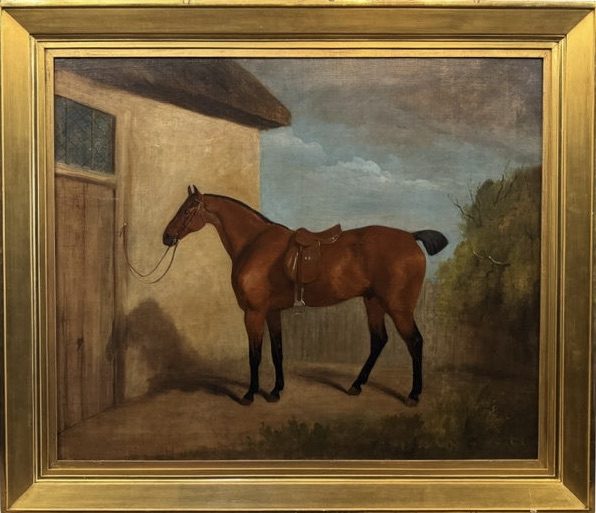
1840’s English Sporting Art Oil Painting Portrait of Saddled Horse. View this piece here.
It’s Not Just About Racing
Interestingly, it’s rarely the obvious race scenes that draw the most attention.
Yes, the energy of the turf has appeal, the line of horses stretched mid-stride, the tension in the jockey’s posture. But often it’s the quieter pieces that resonate more deeply. A groom in a dim stable. Ponies against a wide moor. A moment before or after the race.
The works that endure tend to hold both strength and restraint.
And that balance translates well into rooms. Studies. Libraries. Dining rooms that benefit from structure rather than decoration.
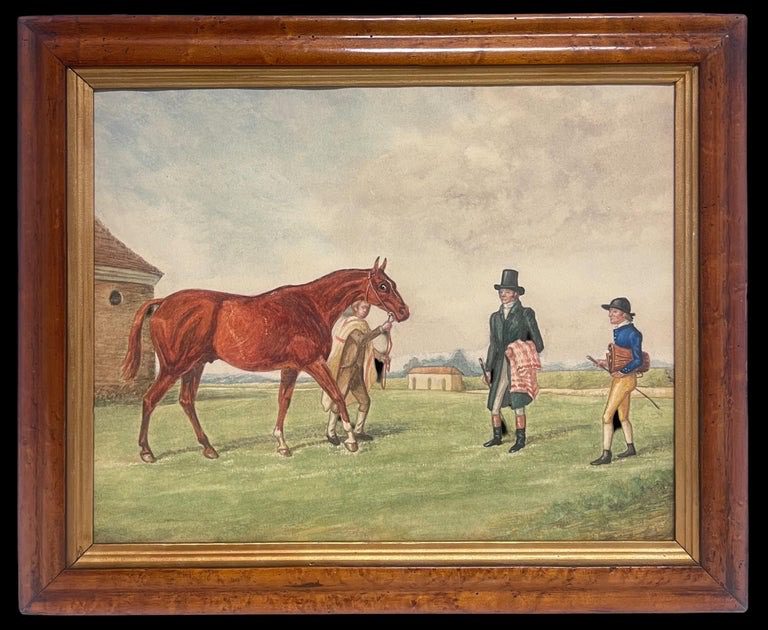
1820’s British Horse Racing Painting Trainer, Horse & Jockey in Field. View this piece here.
Why It Still Holds
There’s also a seriousness to good equestrian painting. Anatomy can’t be faked. Movement can’t be approximated. The artist either understands the form, or they don’t.
Perhaps that’s why the subject has never felt flimsy. Even in contemporary interiors, it introduces narrative without feeling theatrical.
Cheltenham simply reminds us of that.
If you find yourself looking at horse paintings differently this week, you can explore our current collection online, or get in touch if you’d like to talk through what works in your space.
