



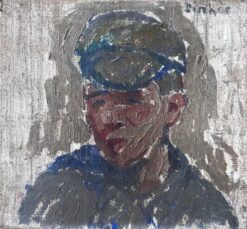
Portrait believed to be of Ambroise Vollard
by Adolphe GUMERY (1861-1943)
oil painting on canvas stuck on board, unframed
faintly signed & dated 1883
board: 10 x 8.5 inches
condition: very good though the edges of the canvas are lifting a little.
provenance: private collection, Paris
Adolphe Gumery was the son of the sculptor Charles Gumery. He had one son, Achille, a painter, who was killed during World War I. From 1882, Adolphe Gumery was a student at the École des Beaux-Arts in Paris, where he was taught by Gustave Boulanger and Jules Lefebvre. From 1881 to 1891, he exhibited at the Salon des Artistes Français, and from 1891 to 1942 at the Salon de la Société Nationale des Beaux-Arts, becoming an associate member in 1904, a full member in 1906, then a member of the jury and secretary-general. In 1906, he was involved in the founding of the Salon d’Automne. He had numerous solo exhibitions, in Paris, Tunis and Brussels. In 2002, the Taylor Foundation in Paris presented a retrospective exhibition of his paintings and drawings.
Ambroise Vollard (1866–1939) was a pivotal figure in the development of modern art in France at the turn of the 20th century. As a dealer, publisher, and patron, he played an essential role in the early careers of artists such as Paul Cézanne, Vincent van Gogh, Paul Gauguin, and Pablo Picasso. Vollard was known for his willingness to support emerging, often controversial talents, frequently exhibiting their work long before they received critical or commercial recognition.
In addition to his activities as a gallerist, Vollard was a significant publisher of *livres d’artiste*, collaborating with leading artists and writers to produce some of the most important illustrated books of the modern era. His Paris gallery functioned as both a commercial space and an incubator for avant-garde innovation, offering an alternative to the conservative institutions of the French art establishment.
Vollard’s legacy lies not only in his eye for talent but in his foundational influence on the course of modernism. Any connection to Vollard—through exhibition, publication, or personal portraiture—marks an artist as part of a broader historical narrative that helped define 20th-century art.
| Dimensions | 8.5 × 10 in |
|---|
Be the first to review “1880’s French Impressionist Oil Painting Portrait Ambroise Vollard Famous Dealer”
Related Products
Figurative Paintings
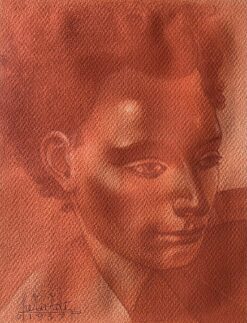
1950’s French Signed Sanguine Chalk Head Shoulders Portrait of Man

Figurative Paintings
Fine 1880’s British Signed Oil Painting Old Fisherman Sailor Standing on Beach
Paintings under £1000
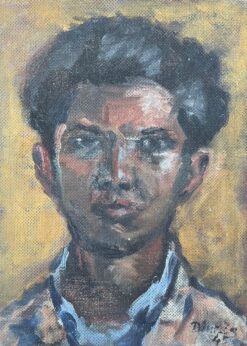
Mid Century French Impressionist Signed Oil Head & Shoulders Portrait of Man

Paintings under £1000
Mid Century French Impressionist Oil Portrait of Vintage Fashion Style Figure
Paintings under £1000
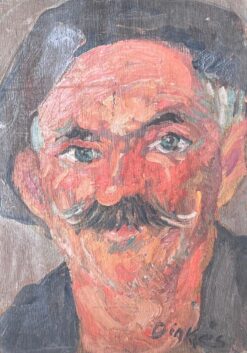
Mid Century French Impressionist Signed Oil Man in Beret with Moustache Portrait
Figurative Paintings
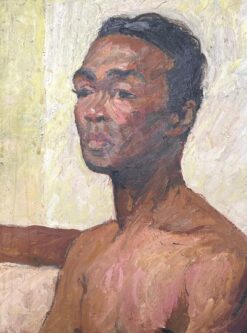
Mid Century French Oil Painting Half Length Male Nude Portrait Seated Man
Figurative Paintings
Dapper Young Male In Blue Cap Portrait Mid Century French Impressionist Painting
Reviews
There are no reviews yet.