

Art & Interiors, Collector's Notes
Why Some Paintings Transform a Room (And Others Don’t)

There’s a moment people often describe when they’re choosing a painting.
They like it. They can see it working. But there’s a hesitation they can’t quite place.
Will it actually change the room, or just sit in it?
It’s a fair question. And the answer isn’t always about style, or subject, or even how much you like it.
It’s about what the painting does to the space around it.
It’s not just what you see, it’s what you feel. Some paintings settle quietly into a room. Others shift the whole atmosphere.
A soft landscape, for example, doesn’t ask much of the space. It brings a kind of calm with it. The colours sit easily. The eye doesn’t have to work. You live with it without thinking too hard about it.
An expressive piece does something different. It draws attention straight away. It creates contrast, energy, sometimes even tension. It becomes part of how the room is experienced, not just how it looks.
Neither is better. But they don’t behave in the same way. And that’s often where the decision sits.
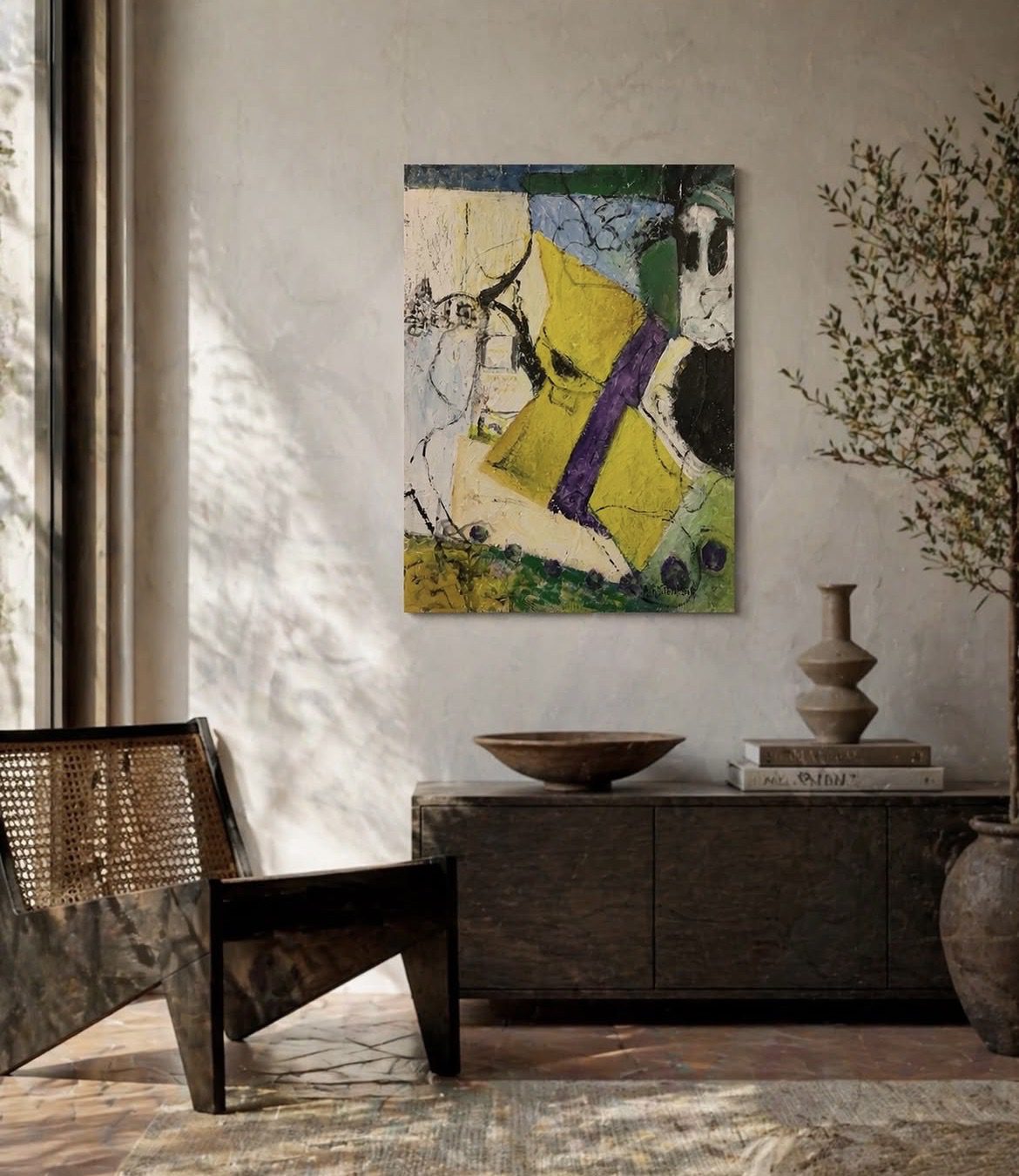
The mistake people make
A lot of people choose a painting in isolation. They look at it online, or in a gallery, and think, Do I like this? Which is a good place to start. But it’s not quite enough.
Because a painting isn’t experienced on its own. It’s experienced in a room, with everything else around it. Light, furniture, wall colour, even how the space is used day to day, all of it plays a part. That’s why something that feels right in one setting can fall a bit flat in another.
Quiet vs expressive isn’t about taste It’s easy to think this comes down to personality. That some people prefer calm work, and others want something bold. But in reality, it’s often more practical than that.
A quieter painting can bring balance to a busy space. An expressive one can give structure to a room that feels a bit too neutral. Sometimes the right choice isn’t the one that matches the room. It’s the one that changes it.
What actually makes it work
When a painting really lands in a space, it usually does one of three things:
-
It softens the room
Taking the edge off sharper lines, brighter light, or more functional spaces -
It adds energy
Lifting a room that feels a bit flat or unfinished -
It anchors everything else
Giving the space a focal point so it feels considered rather than accidental
You don’t need to analyse it in those terms when you’re choosing.
But you tend to feel it when it’s right.
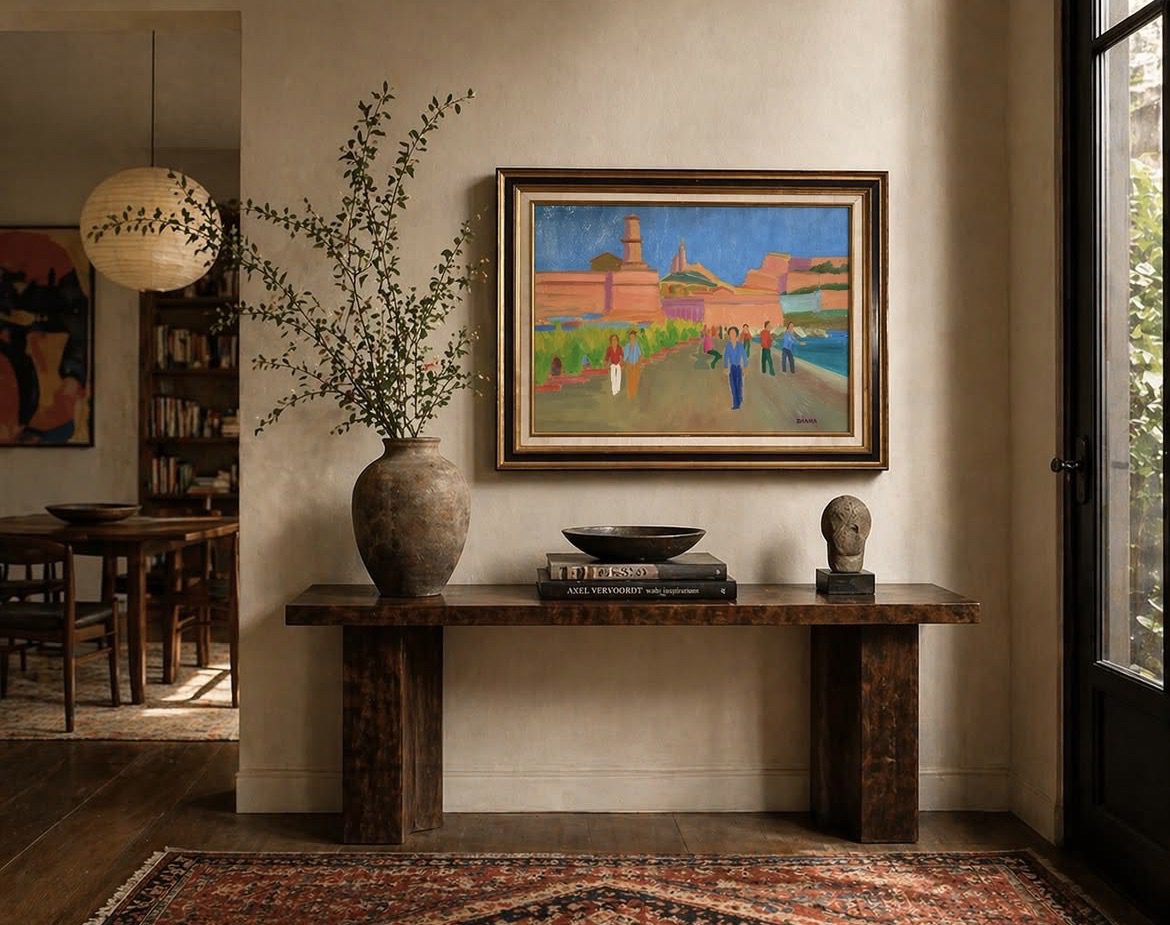
A quieter way to think about it
Instead of asking, Do I like this painting?
It can help to ask:
What would this do to the room I’m putting it in?
Would it calm things down?
Would it bring something into focus?
Would it add something that isn’t already there?
That shift is usually where people become more confident in their choice.
And when it clicks, it’s obvious When a painting works, you don’t second guess it for long. It doesn’t feel like a risk. It feels like something that was missing.
And that’s often the difference between a painting you like…
and one you end up living with for years.
Looking for a painting you will love for years to come? Browse our collections.
