

Collector's Notes
Why Are Collie Paintings So Popular
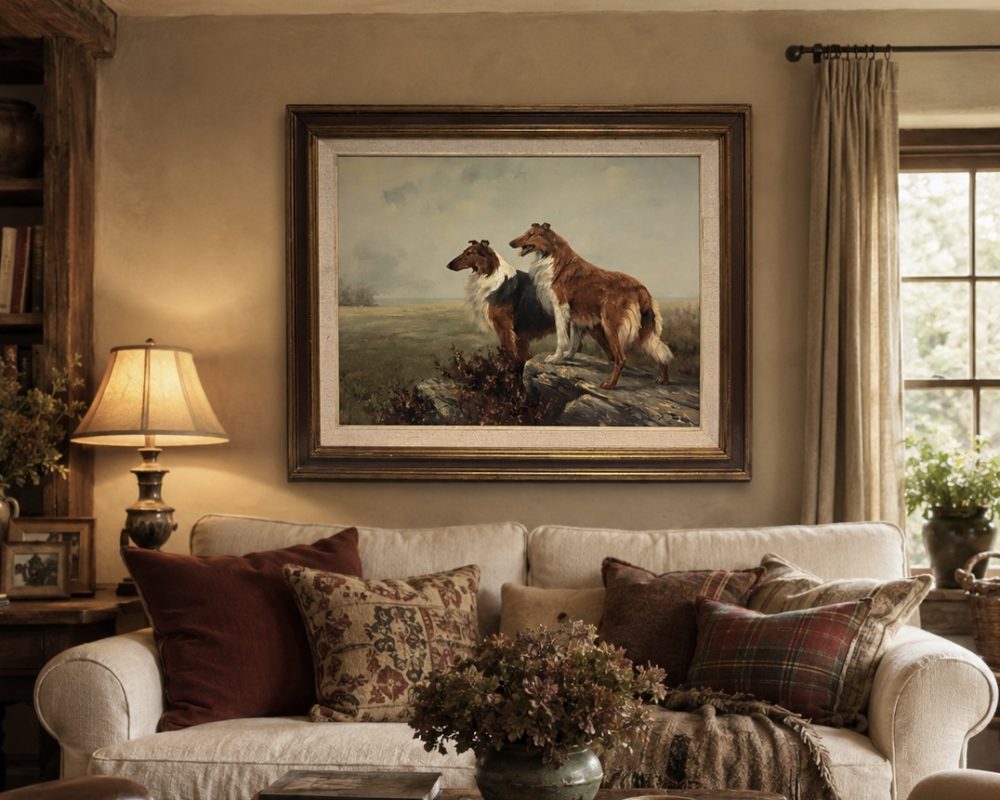
Certain subjects appear in painting again and again, and collies are one of them.
They turn up across different periods, from 19th century English school works to more formal Victorian portraits, and even in looser, more modern compositions. Whether the setting is a farm, a hillside, or a simple portrait, the dog itself tends to remain the focus.
That consistency is not accidental.
Part of it comes down to what collies represent. They are closely tied to the British countryside, particularly farming and rural life. In many paintings, they are not just included as animals within a scene, but as working companions. You often see them alongside a shepherd, or positioned slightly apart, watching over livestock. Even when the setting changes, that sense of purpose tends to stay.
You can see this clearly in works that place the dog within a wider landscape. A shepherd with a collie, for example, becomes less about the individual figures and more about the relationship between them. The dog is alert, responsive, and aware of its surroundings, which gives the whole painting a sense of quiet activity.

The Shepherd and his Border Collie Dog by John Edwards (English, 1940 – 2020). View this piece Here.
In other cases, the focus shifts more directly onto the dog itself. Victorian and early 20th century portraits often treat collies with a level of attention usually reserved for people. Artists like Lucy Waller or John Wright Barker capture not just the physical detail of the animal, but something of its character. The expression, the posture, and even the setting are all used to suggest intelligence and loyalty.
That is usually what people respond to first.
There is something familiar about these paintings, even for those who have never worked with animals or lived in a rural setting. Collies tend to be depicted as attentive and composed, which makes them easy to connect with. They do not feel decorative in the way some animal paintings can. Instead, they feel purposeful.
That sense of familiarity is part of the reason they continue to work in a home. They sit comfortably within more traditional interiors, but they do not feel limited to them. The subject is recognisable, the composition is often straightforward, and the overall tone tends to be calm rather than dramatic.
We see this quite often with buyers. Collie paintings do not usually divide opinion. They appeal quite quickly, and they tend to hold their place over time. Whether it is a more formal portrait or a landscape scene with figures, the subject itself carries enough presence without needing anything exaggerated.

The Farmers Dog English School, early 20th century signed oil on board, framed. View this piece Here.
It is also worth noting that many of these works were painted with a level of care that reflects how the animals were viewed at the time. These were not just background details. They were working animals, companions, and, in many cases, valued members of a household or farm. That attitude comes through in the way they are painted.
That is probably why they continue to feel relevant.
The setting may change, and the style may vary slightly, but the subject remains the same. A dog that feels intelligent, grounded, and closely connected to its surroundings.
And that is something people tend to respond to, whether they are aware of it or not.
If you are drawn to animal paintings, you can explore our current selection of collie and pastoral works on the website, or get in touch if you are looking for a particular type of animal or scene.
Explore our collection of animal works here.
