

Collector's Notes
What Does “Cubism” Actually Mean? And Why It Still Matters

Cubism is one of those art world terms that gets used a lot. You see it on labels, in catalogues, in conversations where everyone seems to nod along knowingly. And yet, it’s also one of the movements people feel most unsure about. Modern. Abstract. A bit difficult, perhaps.
Part of that uncertainty comes from the assumption that cubism is simply about sharp angles and square-looking figures. That it’s called “cubist” because everything looks like a cube. That’s understandable, but it’s also a little misleading.
Cubism wasn’t really about cubes at all. It was about how we see.
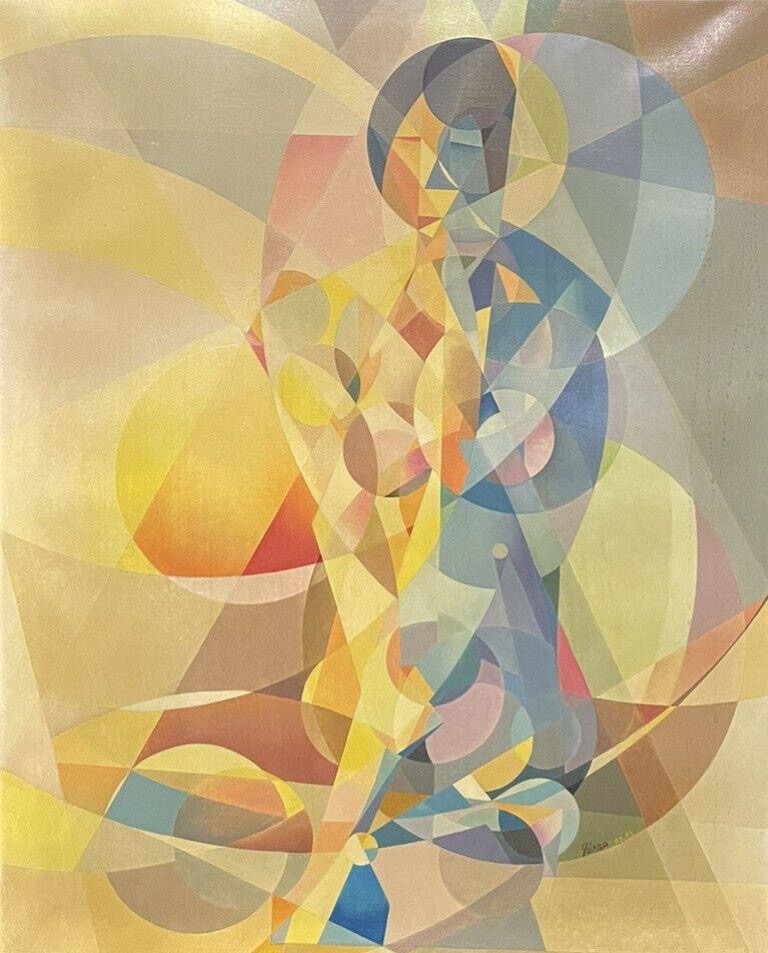
Artist/ School: French School, signed lower corner, circa 1980’s period. View further details here.
The movement is most closely associated with artists like Pablo Picasso and Georges Braque, who, in the early 20th century, began questioning the long-standing rules of Western painting. For centuries, artists had been encouraged to show the world from a single viewpoint. One moment, one angle, one neatly organised space.
But that isn’t how we experience things in real life.
Picasso and Braque were interested in what would happen if a painting could show more than one perspective at once. Instead of fixing the viewer in a single position, they began breaking forms apart and reassembling them on the canvas. Not to confuse the viewer, but to describe an object more fully. Front, side, back. Memory and observation combined.
There’s also an important influence that often gets overlooked. Both artists were deeply inspired by the late work of Paul Cézanne, who famously suggested that nature could be understood through cylinders, spheres and cones. Cézanne wasn’t a cubist himself, but his way of simplifying and restructuring form opened the door for what came next.
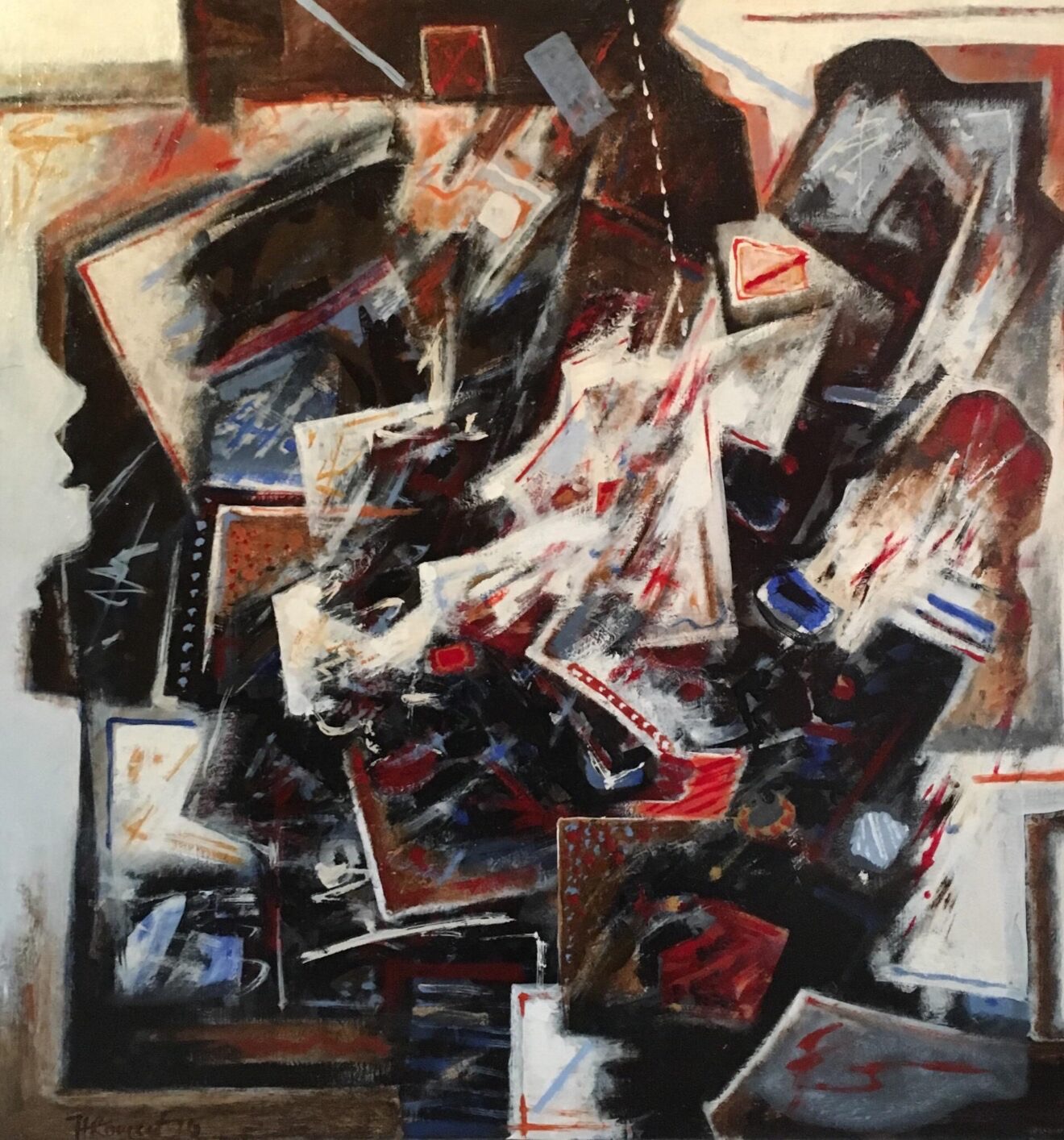
Abstract Oil Painting, Red, Cream, Blue and Black, Cubism Style, Signed French School, 1974. View further details here.
Cubism didn’t arrive fully formed. It evolved. Early cubist works can feel quite restrained, with muted colours and fractured but still recognisable subjects. Over time, artists like Juan Gris brought more clarity, colour and structure into the movement, showing that cubism could be elegant, balanced and even decorative.
It’s also worth remembering that cubism was not universally welcomed. Many viewers found it baffling or even offensive when it first appeared. Paintings that refused to behave properly often do. But that resistance is part of why the movement mattered. Cubism challenged the idea that painting had to imitate the world to be meaningful. It suggested that interpretation could be just as truthful as representation.
At Stag Gallery, we often find that people who say they “don’t like cubist work” are responding more to its reputation than to the paintings themselves. When they spend time with the work, particularly works on paper or more lyrical interpretations, something shifts. The paintings begin to feel thoughtful rather than aggressive. Curious rather than confrontational.
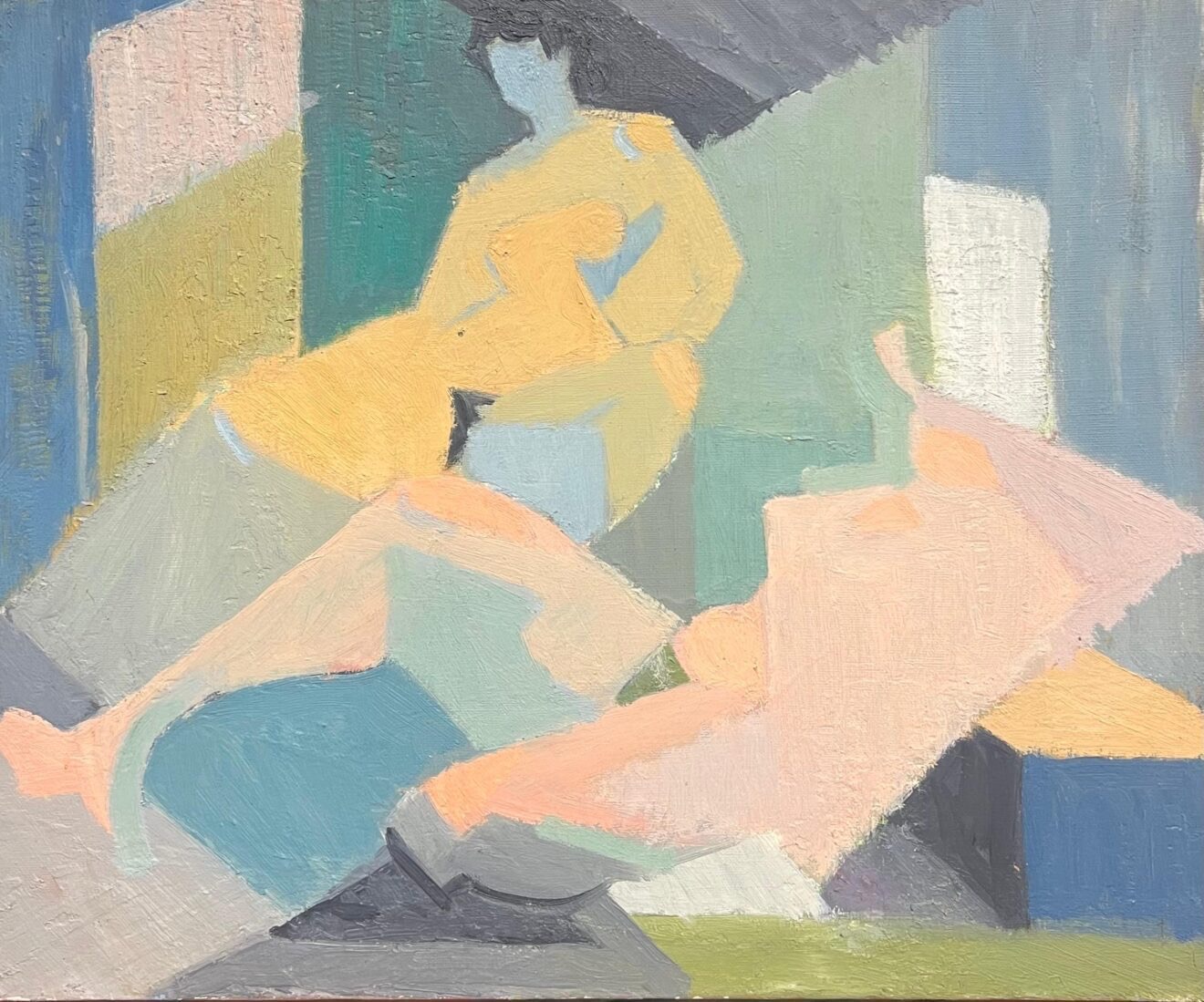
Nude Models by Therese Hummel (French, 1911-1999) oil on canvas. View further details here.
Cubism still matters because it changed everything that followed. Even artists who rejected it were responding to it. It opened the door to abstraction, to experimentation, and to the idea that art could reflect how we experience the world, not just how it looks.
Perhaps most importantly, cubist works tend to reward patience. They don’t always make themselves known immediately. They ask you to look again. To notice how shapes echo one another, how colour holds the composition together, and how fragments slowly resolve into something familiar.
In a world that often encourages instant reactions, there’s something quietly reassuring about that.
Cubism reminds us that understanding doesn’t always come at first glance, and that some of the most rewarding paintings are the ones that unfold over time.
We often have cubist and cubist-influenced works in the collection, particularly pieces that feel thoughtful and approachable rather than overtly challenging. These are works that sit beautifully in a home, revealing more of themselves the longer you live with them. If you’re curious, our current selection of cubist works can be viewed online, or we’re always happy to talk through pieces that might suit your space and your way of living with art.
