

Art & Interiors
The Quiet Appeal of Still Life Painting
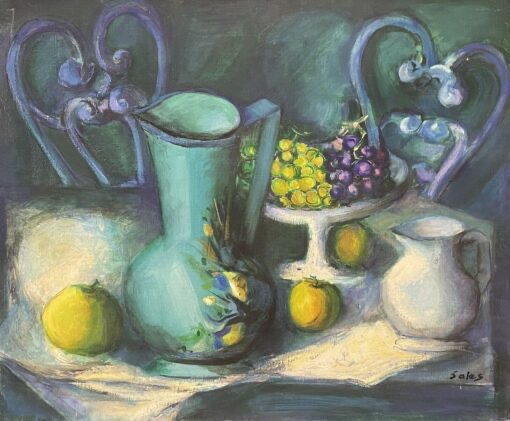
Still life paintings don’t always stand out straight away.
Placed next to a dramatic landscape or something more expressive, they can feel quieter, more contained. A table, a vase, a simple interior scene.
And yet, they’re often the paintings people end up living with the longest.
They don’t ask too much of a room
One of the reasons still life works so well is that it doesn’t compete with the space around it.
A landscape can open a room up. An expressive piece can shift its energy.
A still life tends to sit more gently within it.
That doesn’t mean it’s less interesting.
It just means it doesn’t rely on scale or movement to hold your attention.
In a lot of homes, that’s exactly what’s needed.
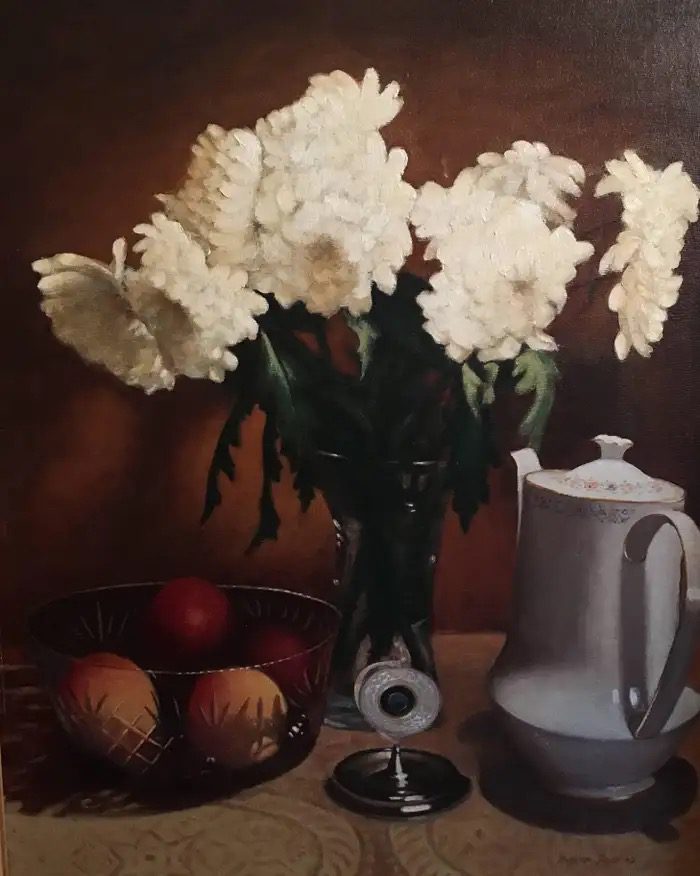
British Still life Flowers and Fruit Signed Oil. View further details Here.
There’s something familiar about them
Most still life paintings are built from everyday things. Objects you recognise without thinking too hard about them.
A bowl of fruit. A glass. A folded cloth.
Sometimes an interior corner, half-lit, slightly ambiguous.
There’s no need to interpret it. No need to work out what it means.
That familiarity makes it easy to live with. It becomes part of the room quite quickly.
They hold attention in a quieter way
What’s interesting is how often people come back to them.
Not in an obvious way. They don’t demand it.
But over time, you start to notice small things. The way light falls across a surface. The balance of colour. The placement of objects.
They reveal themselves slowly.
And that tends to hold up better over time than something that relies entirely on impact.
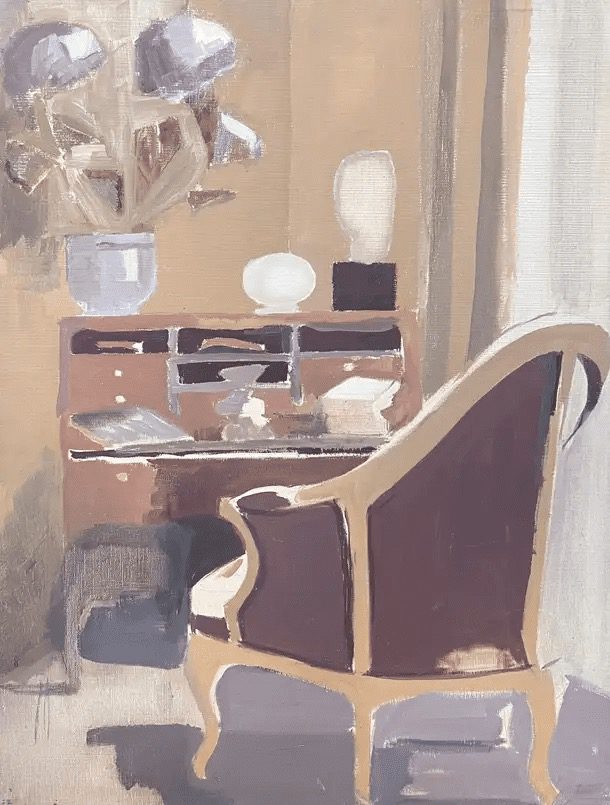
20th Century French Modernist Oil Painting Interior Salon Bureau Desk & Chair. View further details Here.
They work in more spaces than people expect
Still life paintings are often associated with kitchens or dining rooms.
And they do work well there.
But they’re just as effective in hallways, bedrooms, or smaller spaces where something more dominant might feel out of place.
Because they don’t overwhelm the room, they’re easier to place.
They sit comfortably alongside furniture, rather than competing with it.
A different kind of presence
Some paintings define a room.
Still life tends to do something else. It supports it.
It adds detail, texture, a sense that the space has been thought about. But it doesn’t take over.
That’s often why people return to it, even if it wasn’t what they were initially looking for.
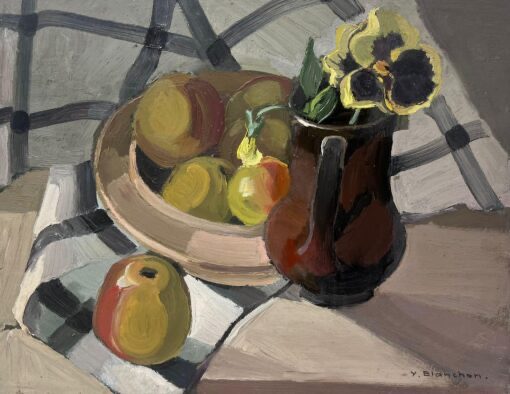
1930’s French Impressionist Table Kitchen Table Interior Apples and Brown Jug. View further details Here.
The appeal isn’t complicated
There’s no single reason people choose still life.
It’s usually a combination of things.
Ease. Familiarity. Balance.
It’s work that doesn’t feel like a decision every time you look at it.
And in the context of a home, that’s often exactly what makes it last.
Explore more of our Still Life works Here.
