

Art & Interiors
What Is Impressionism in Art

Impressionism is one of those terms people recognise, even if they are not completely sure what it means.
It tends to be used quite loosely. A softer landscape, visible brushwork, lighter colours, and it is often described as “Impressionist” without much more explanation. And while that is not entirely wrong, it does miss what actually makes the style distinct.
Impressionism began in France in the late 19th century, at a time when painting was expected to be precise, detailed, and often quite formal. A group of artists began to move away from that approach. Instead of trying to capture a scene exactly as it was, they focused on how it felt in a particular moment.
That shift is where the name comes from. Rather than painting every detail, they were capturing an impression of what they were seeing. Light, movement, atmosphere. The things that change quickly and are difficult to fix precisely.
You can usually recognise it quite easily once you know what to look for. The brushwork is more visible and less controlled than earlier styles. Colours are often lighter and more varied. Shadows are not just black or grey, but made up of different tones. Edges can feel softer, as if the scene is still moving slightly.
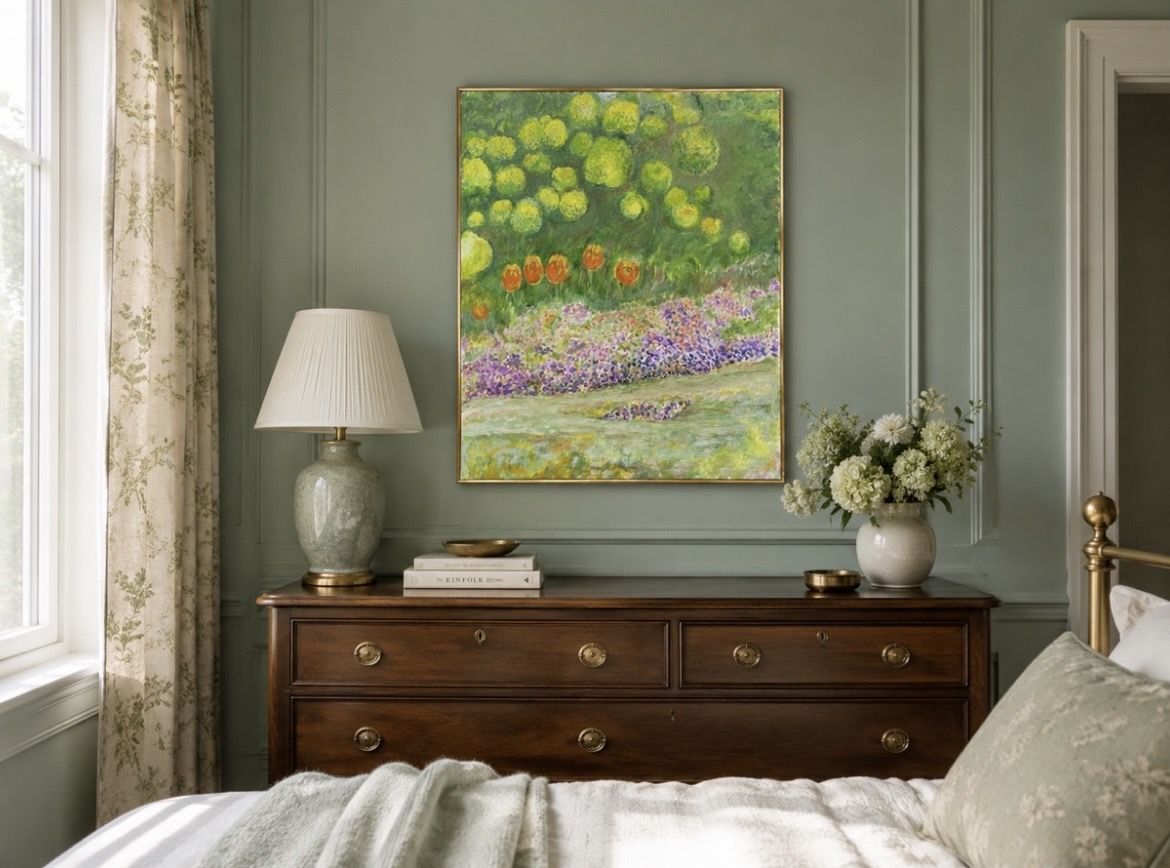
Tulips in the Garden French Impressionist Style Floral Landscape Claudine Riboulet Oil. Find out more Here.
It also tends to feel more immediate. Many Impressionist works were painted outdoors, directly in front of the subject, rather than carefully constructed in a studio. That gives them a sense of spontaneity, even when the composition itself is quite considered.
What is interesting is that these paintings, which were once seen as quite radical, now feel very easy to live with. The softness of the colour, the natural subject matter, and the way light is handled all sit comfortably in a domestic space.
We see that quite often with buyers. Impressionist works do not tend to divide opinion in the same way more abstract or highly stylised pieces can. People respond to them quite quickly, even if they are not thinking in terms of movements or art history.
There is also a familiarity to them. Landscapes, gardens, coastal views. Subjects that feel recognisable, but shown in a way that is slightly more relaxed and atmospheric.
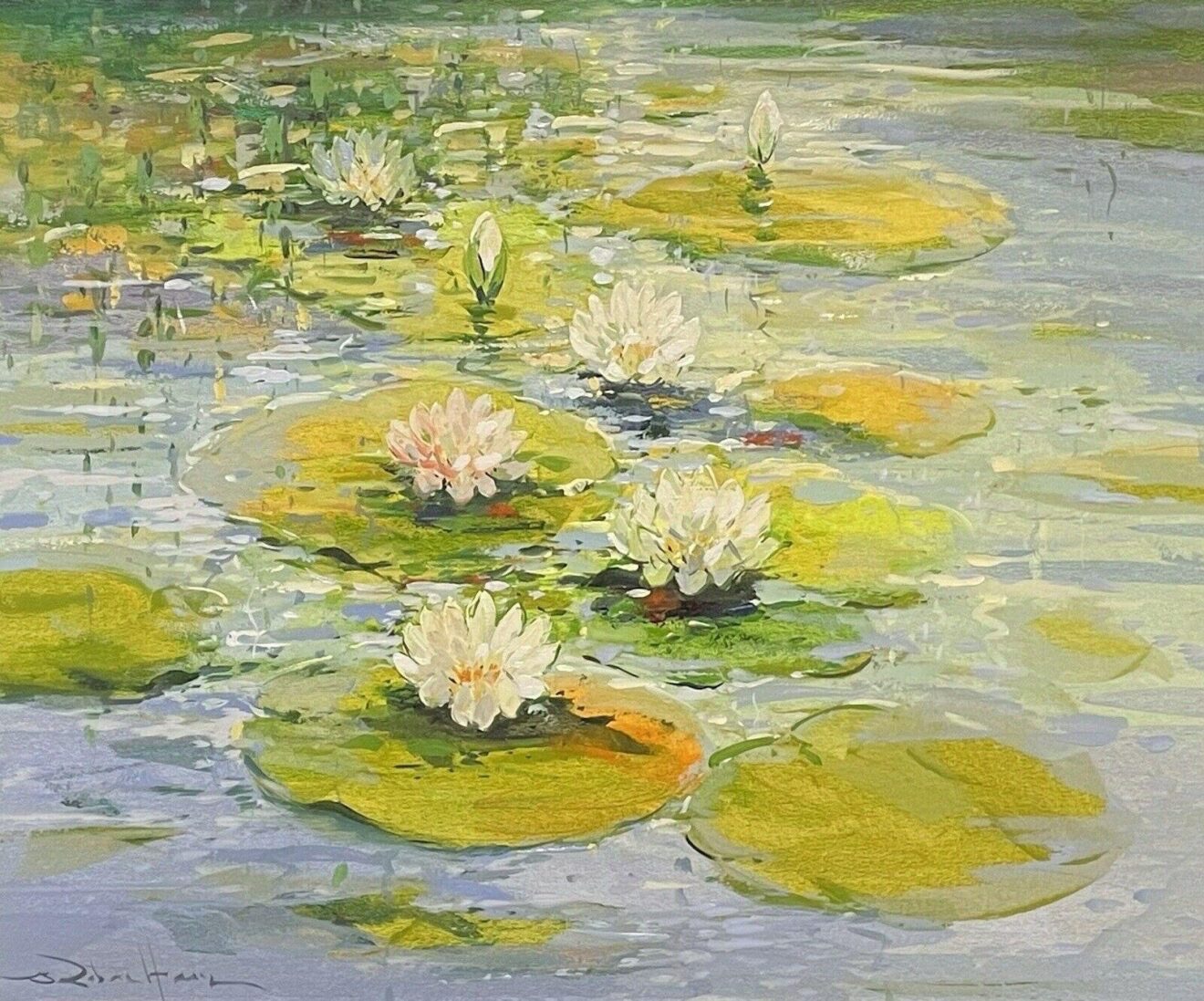
Waterlily Pond Impressionist Floral Landscape Acrylic Rob de Haan. Find out more Here.
That balance is probably why the style has remained so popular. It is grounded enough to feel approachable, but distinctive enough to hold attention over time.
You do not need to know the history to respond to it, but once you understand what the artists were trying to do, it becomes easier to see why these paintings continue to work so well today.
If you are drawn to this style, you can explore our current selection of Impressionist and Impressionist-influenced works on the website, or get in touch if you would like help finding something similar.
Explore our Impressionist works.
