

Art & Interiors
Art for In-Between Spaces: Hallways, Landings and Quiet Corners

The spaces we pass through every day are often the ones we think about the least.
Hallways, landings and those slightly awkward corners between rooms tend to be treated as purely functional. Places to move through, rather than places to pause. And yet, these are often some of the most interesting spaces to live with art.
Unlike a sitting room or a bedroom, in-between spaces don’t usually come with expectations. There’s no pressure for a painting to “anchor the room” or compete with furniture. That freedom allows artworks to be a little more subtle, more personal, and sometimes more surprising.
A painting encountered in passing works differently to one you sit with deliberately. You might only catch it briefly as you move through the house. Over time, those repeated, fleeting moments add up. The work becomes familiar without ever feeling overexposed.
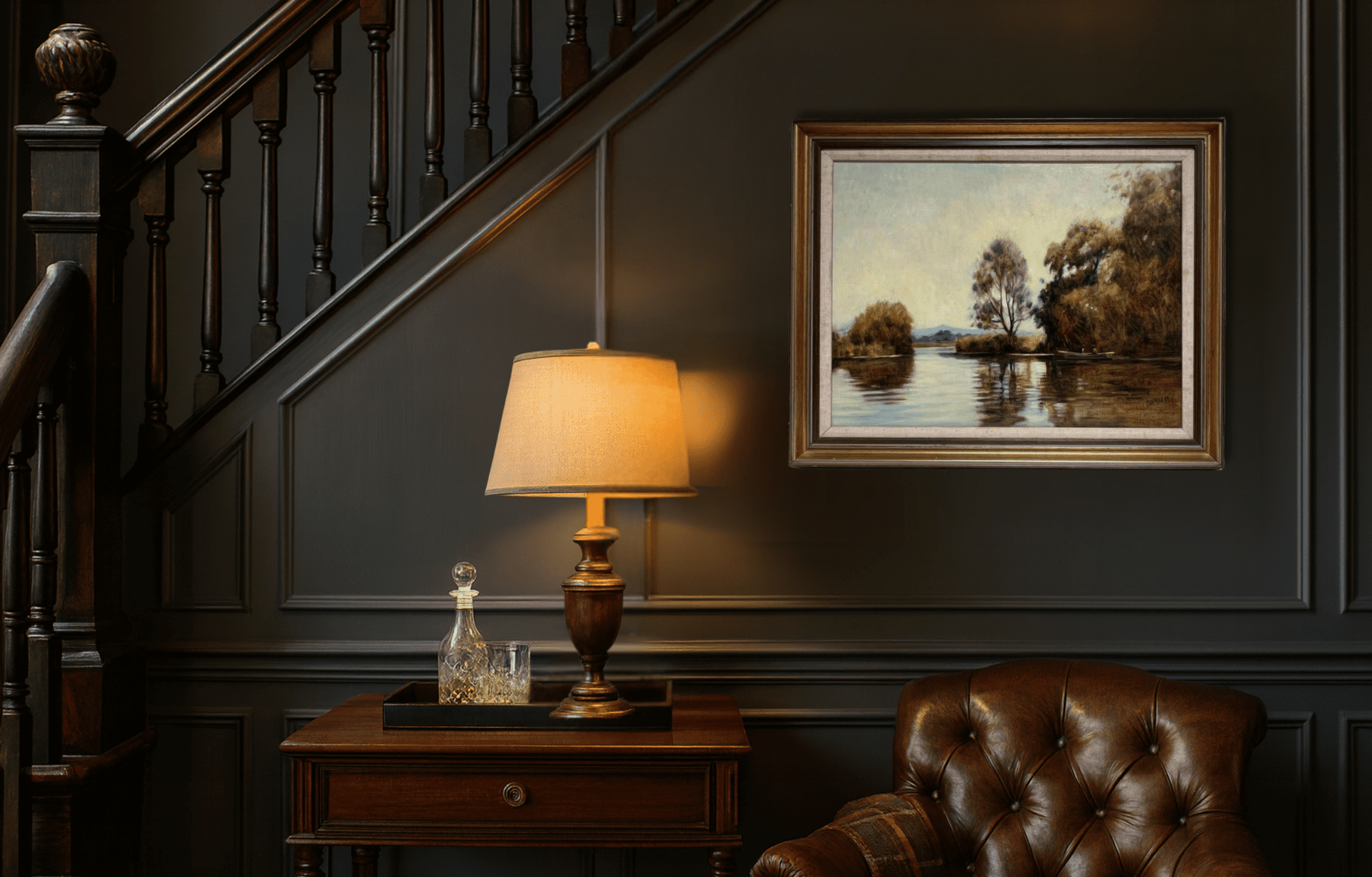
Rowing on the River, English Impressionist, 1980’s period. View further details here.
This is where works on paper, smaller paintings, or pieces with a quieter palette often come into their own. They don’t need to dominate the space to be effective. In fact, restraint is often their strength. A single work on a landing wall, or a small painting tucked into a corner, can completely change how a space feels without ever announcing itself.
We also find that these spaces are ideal for works that feel more exploratory or intimate. Pieces that reward closer looking. A painting you pass ten times a day has the chance to reveal different details over time, rather than all at once.
For buyers, this can be a liberating realisation. Not every artwork needs to make a statement. Some simply need the right setting to breathe.
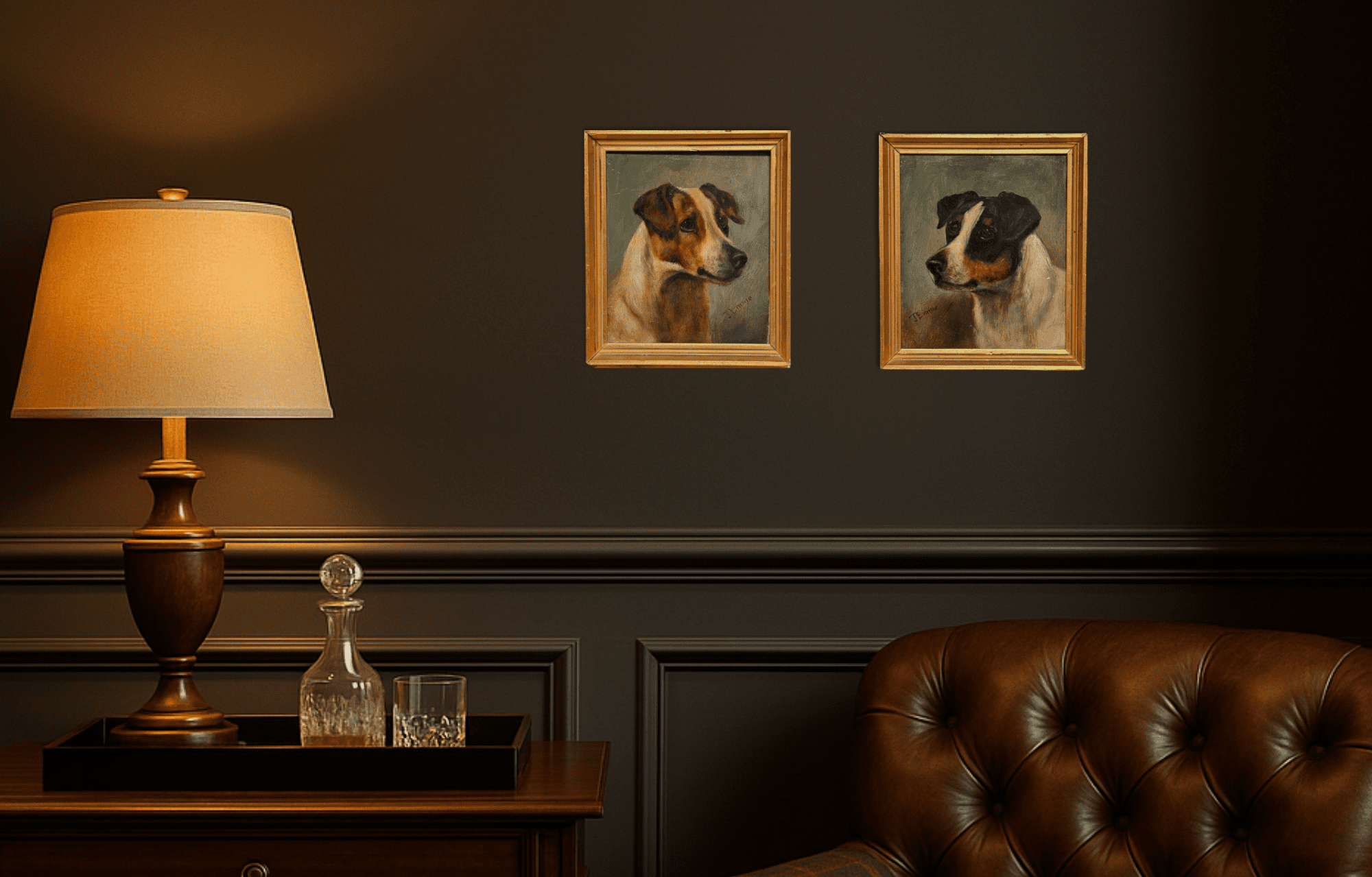
In-between spaces invite a different kind of relationship with art. One that’s less about impact and more about presence.
And often, those are the works that quietly become indispensable.
We often encourage buyers to think beyond the obvious rooms when choosing art. Hallways, stairwells and transitional spaces can be some of the most rewarding places to live with a painting, especially works that reveal themselves gradually.
If you’re unsure where a piece might work best, we’re always happy to talk it through.
